
Playa de las Conchas
La Graciosa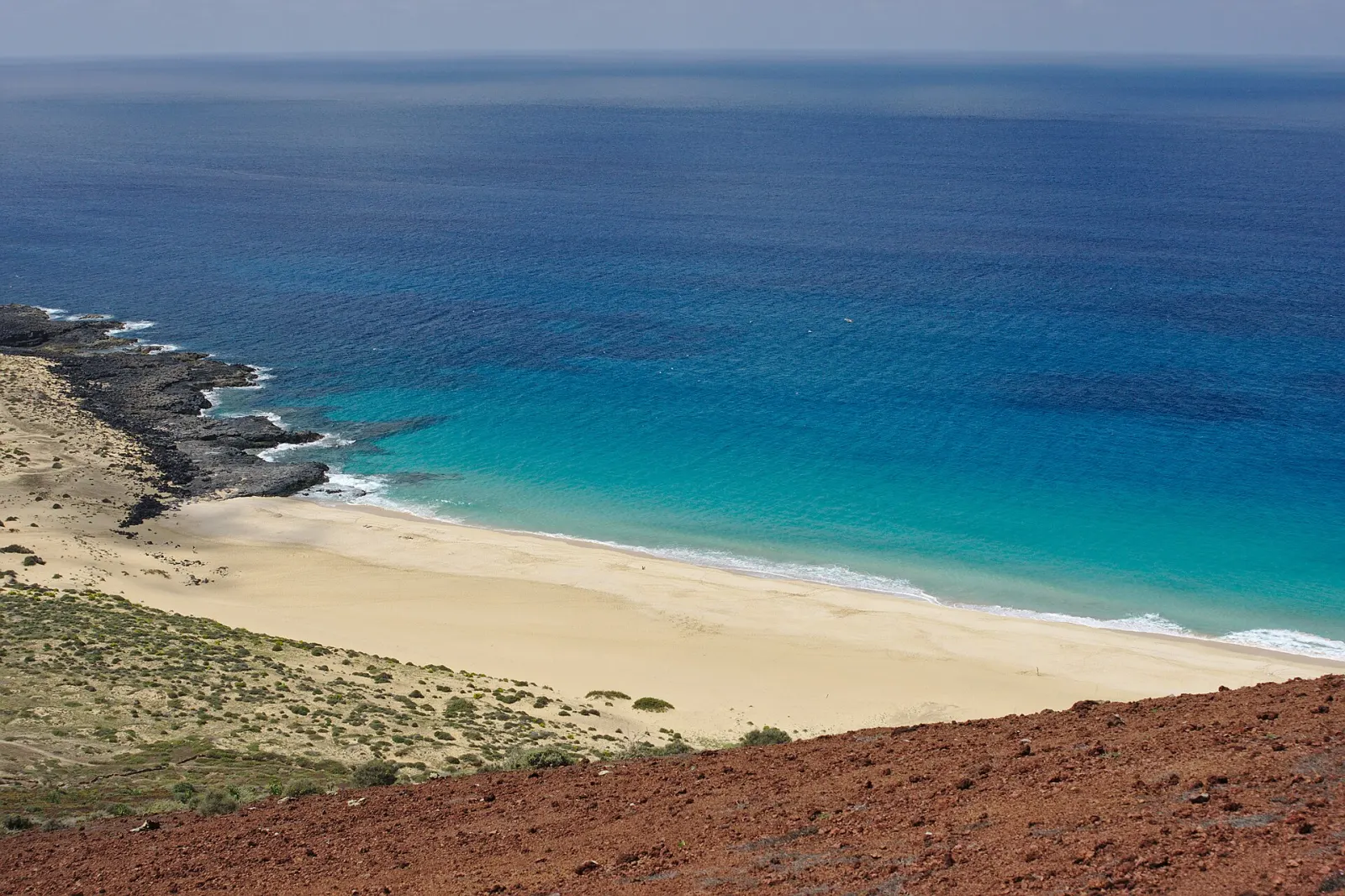
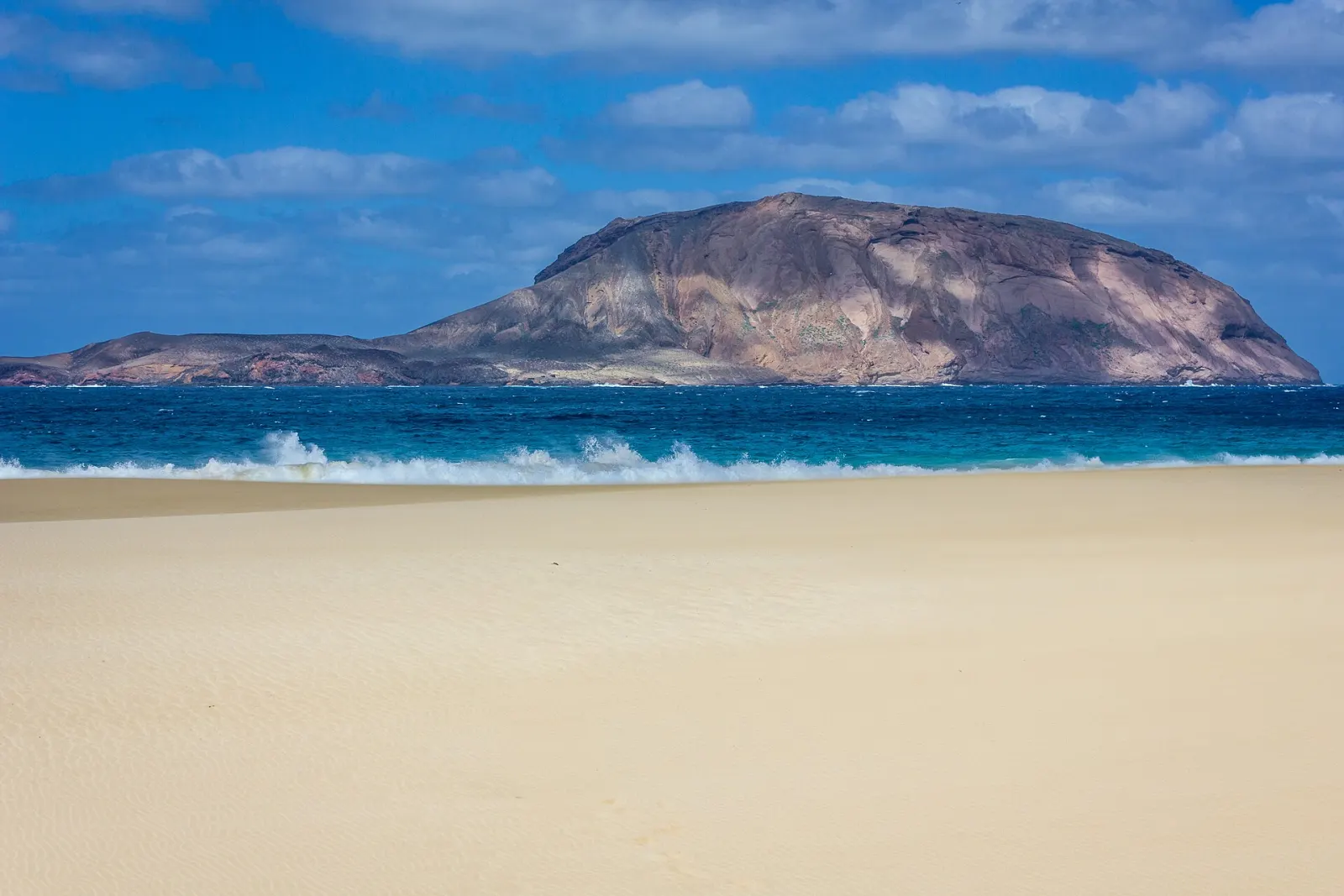
A 610 m stretch of pale sand below Montaña Bermeja on the north of La Graciosa, facing the islet of Montaña Clara, about 5 km from Caleta del Sebo. It has no lifeguards, and waves and strong currents make swimming risky.
Playa de las Conchas is a beach of about 610 m of fine, pale sand on the north coast of La Graciosa, the least populated of the eight inhabited Canary Islands. It sits at the foot of the reddish cone of Montaña Bermeja and looks straight across to the islet of Montaña Clara, with Alegranza and the Roques del Este and del Oeste on the horizon. It is about 5.2 km from Caleta del Sebo, the island's main village, and can be reached only on foot, by bike or by taxi. The municipality of Teguise lists it as a beach with waves and strong currents and no lifeguard service.
Can you swim at Playa de las Conchas?
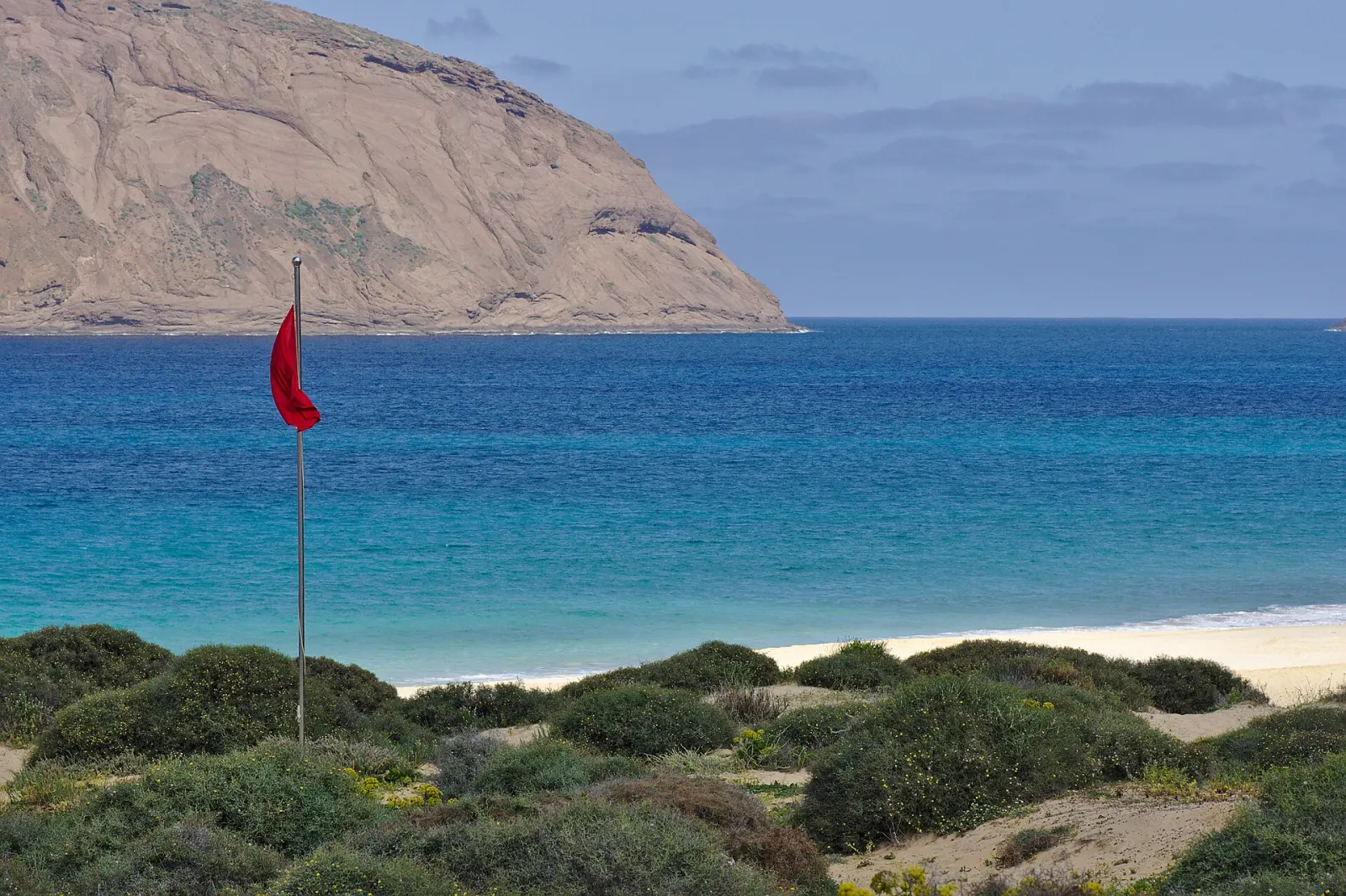
Only with great care, and often not at all. The beach is open to the Atlantic swell, and the official Teguise beach information warns of waves and strong currents; there is no lifeguard or rescue service. Do not swim out, do not swim alone, and keep children close. If the sea is breaking heavily, stay on the sand.
How do you get to Playa de las Conchas?
First you need to reach La Graciosa. Passenger ferries run from Órzola, at the northern tip of Lanzarote, to Caleta del Sebo; Líneas Romero and Biosfera Express both operate the crossing, which takes about 25–30 minutes depending on the sea. From Caleta del Sebo:
- On foot: about 5 km each way along the island's sandy tracks, with no shade. Allow for the return walk and the last ferry back.
- By bike: possible, but sand on the tracks makes some sections hard work.
- By taxi: island taxis run to the beach; agree the pick-up time for the return.
What should you bring?
There are no facilities at the beach: no kiosk, no shade, no water. Carry plenty of drinking water, sun protection and something to eat, and take all rubbish back with you. Fires and barbecues are prohibited. Wind is common on this exposed northern shore.
What is special about the setting?
La Graciosa covers about 29 km² and had 734 inhabitants in 2024; apart from the two villages, Caleta del Sebo and Pedro Barba, the island belongs to the Spanish state and is managed by the national parks agency. That is why the north coast still has no buildings. The best overview of the island and its beaches is from the Mirador del Río on the cliffs of Lanzarote, across the strait.
When is the best time to go?
Calm, clear days are ideal: the colours of the water and of Montaña Bermeja are at their best and the sea is less dangerous. Avoid days with big northerly swell. Start early in summer to walk before the heat. If you like remote beaches, Cofete on Fuerteventura offers a similar sense of space on a much larger scale.
Don’t miss
Know before you go
- Respect the red flag. Waves and strong currents, and no lifeguard service.
- Carry water and shade. There are no services at the beach or along the 5 km track.
- Watch the last ferry. Allow time for the walk or taxi back to Caleta del Sebo.
- No fires or barbecues. Teguise prohibits them on this beach.
Getting there
Take a passenger ferry from Órzola (north Lanzarote) to Caleta del Sebo with Líneas Romero or Biosfera Express (about 25–30 minutes). From Caleta del Sebo, the beach is about 5.2 km away on the north-west of the island, reachable only on foot, by bike or by island taxi along sandy tracks. Check ferry timetables on the operators' websites and plan your return before setting out.