Cofete Beach
Fuerteventura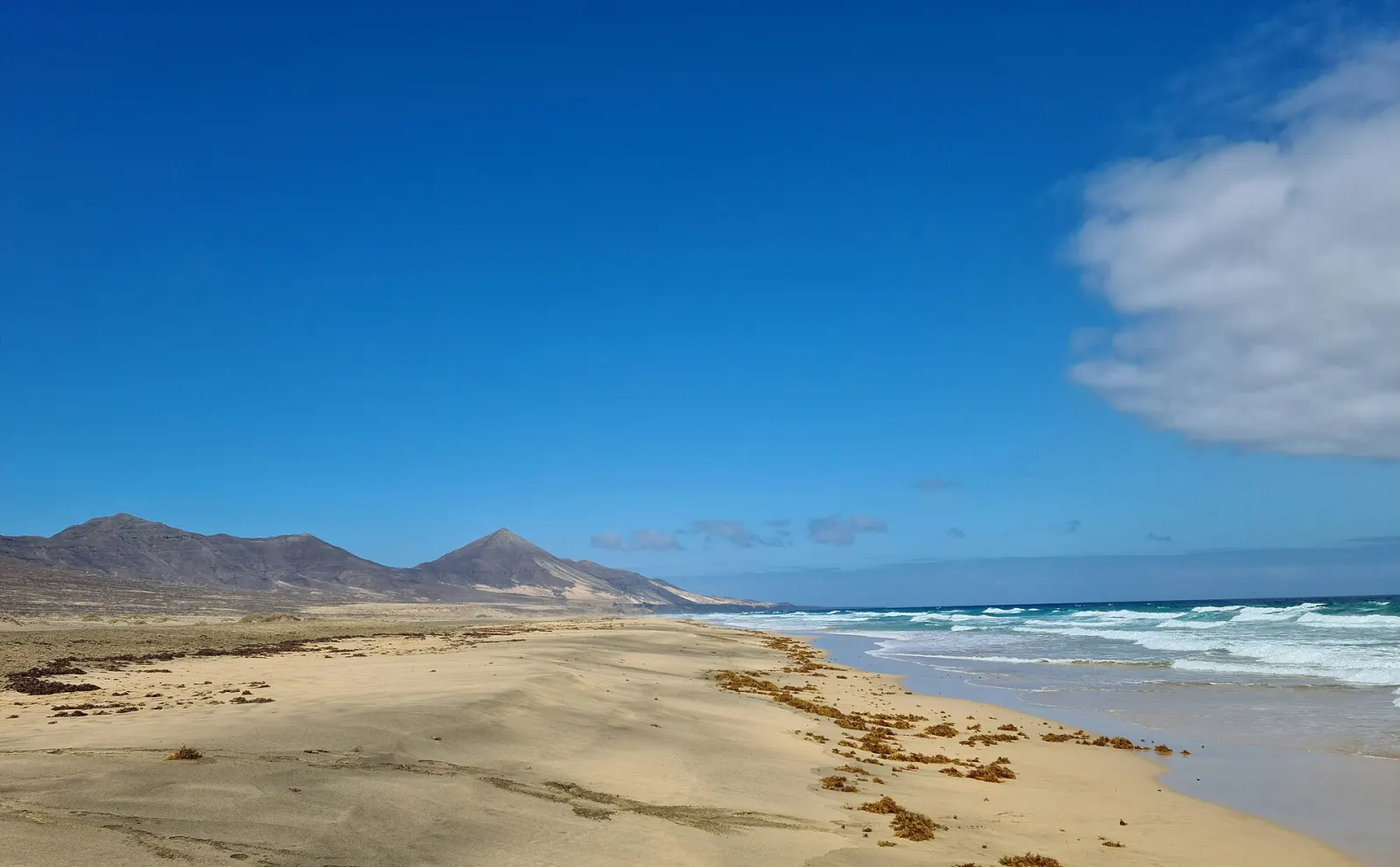
A roughly 12–14 km undeveloped beach on the windward side of the Jandía peninsula, inside the Parque Natural de Jandía in southern Fuerteventura. It is reached by an unpaved road or Tiadhe bus 111, has no services, and its rough sea makes swimming dangerous.
Cofete is a long, undeveloped beach on the north-western (windward) coast of the Jandía peninsula, in the municipality of Pájara on Fuerteventura. Sources put its length at roughly 12 to 14 km of golden sand backed by the island's highest mountains. It lies inside the Parque Natural de Jandía, protected since 1987, and has no lifeguards, kiosks, showers or toilets on the sand. People come for the scale of the landscape — not for a swim.
Is it safe to swim at Cofete?
Treat it as a beach for walking, not swimming. It faces the open Atlantic on the windward side, and Canary tourism sources describe its "rough waters"; strong currents and heavy surf are repeatedly reported, and there is no rescue service. If you go into the water at all, stay in the shallows on a calm day and never alone. Wind and blowing sand are common, and there is no shade.
How do you get to Cofete?
Cofete is reached by a single unpaved road from the Morro Jable side that climbs over the Degollada de Agua Oveja pass, where a viewpoint looks down on the whole beach. There are two practical options:
- Car: the track is unsurfaced; check whether your rental contract allows unpaved roads before you go, and drive slowly.
- Bus: Tiadhe line 111 runs Morro Jable – Cofete – Punta de Jandía. Departures are few, so check the current timetable on tiadhe.com and plan your return before leaving.
Some walkers also cross the pass on foot from Morro Jable.
What else is there besides the beach?
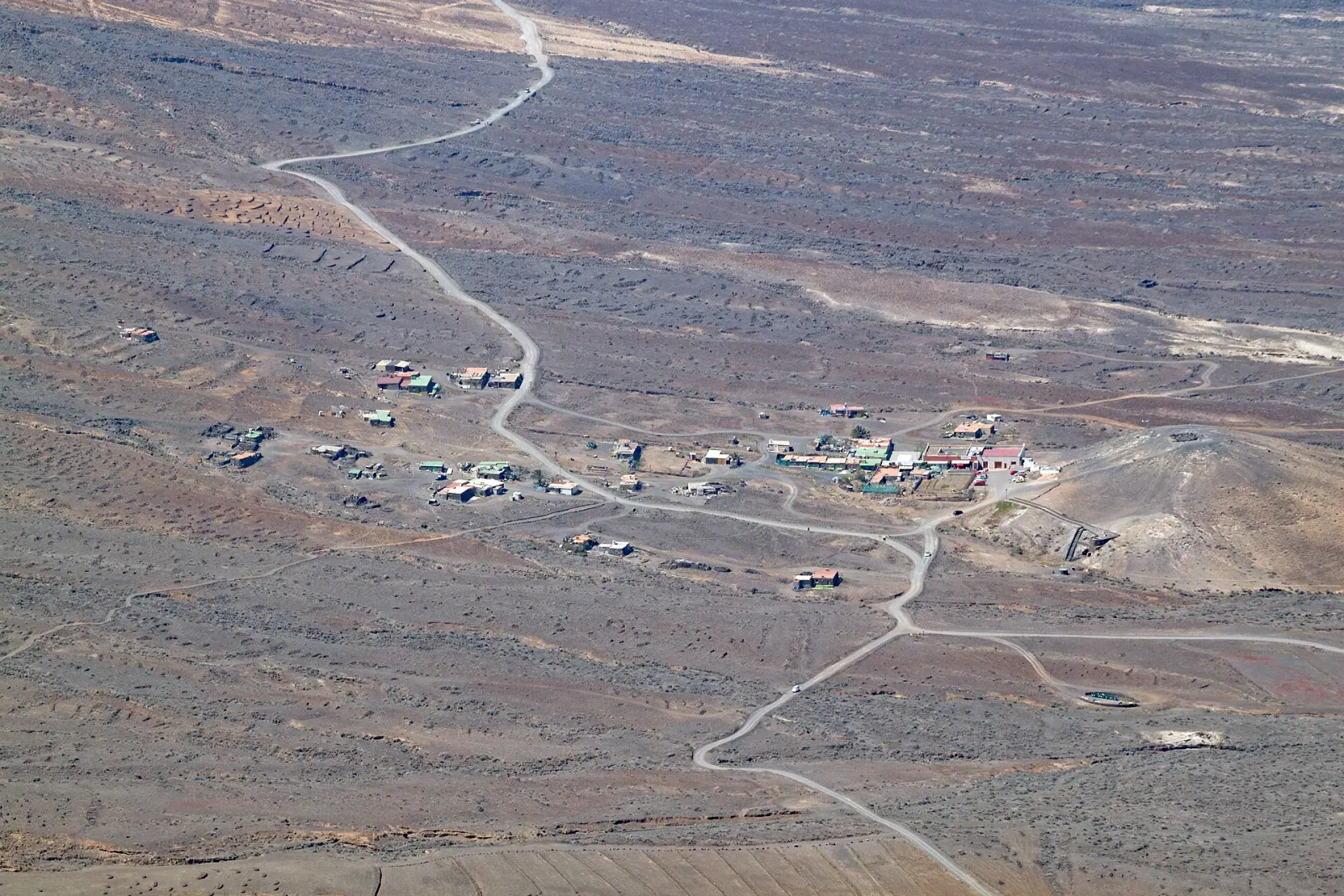
Behind the dunes is the hamlet of Casas de Cofete, with a small population, and a small cemetery near the shore. On the mountain slope stands the Villa Winter, a house built shortly after the Second World War, in 1946. Above everything rises the Jandía massif, whose highest point, Pico de la Zarza (807 m), is the summit of Fuerteventura.
Why is the Jandía peninsula protected?
The Parque Natural de Jandía covers the northern part of the peninsula and its isthmus. Its emblem is the Jandía cardón (Euphorbia handiensis), a cactus-like spurge that grows only here. The park is also an important area for birds, including the houbara bustard and the Canarian Egyptian vulture. Stay on existing tracks and do not drive onto the dunes.
When is the best time to go?
Clear mornings give the best view from the pass before cloud and haze build. In strong winds, sand and spray make the beach unpleasant. Fill the tank and carry water, food and sun protection: there are no services on the beach itself. See the weather-by-month guide for seasonal conditions.
How does Cofete compare with Fuerteventura's other highlights?
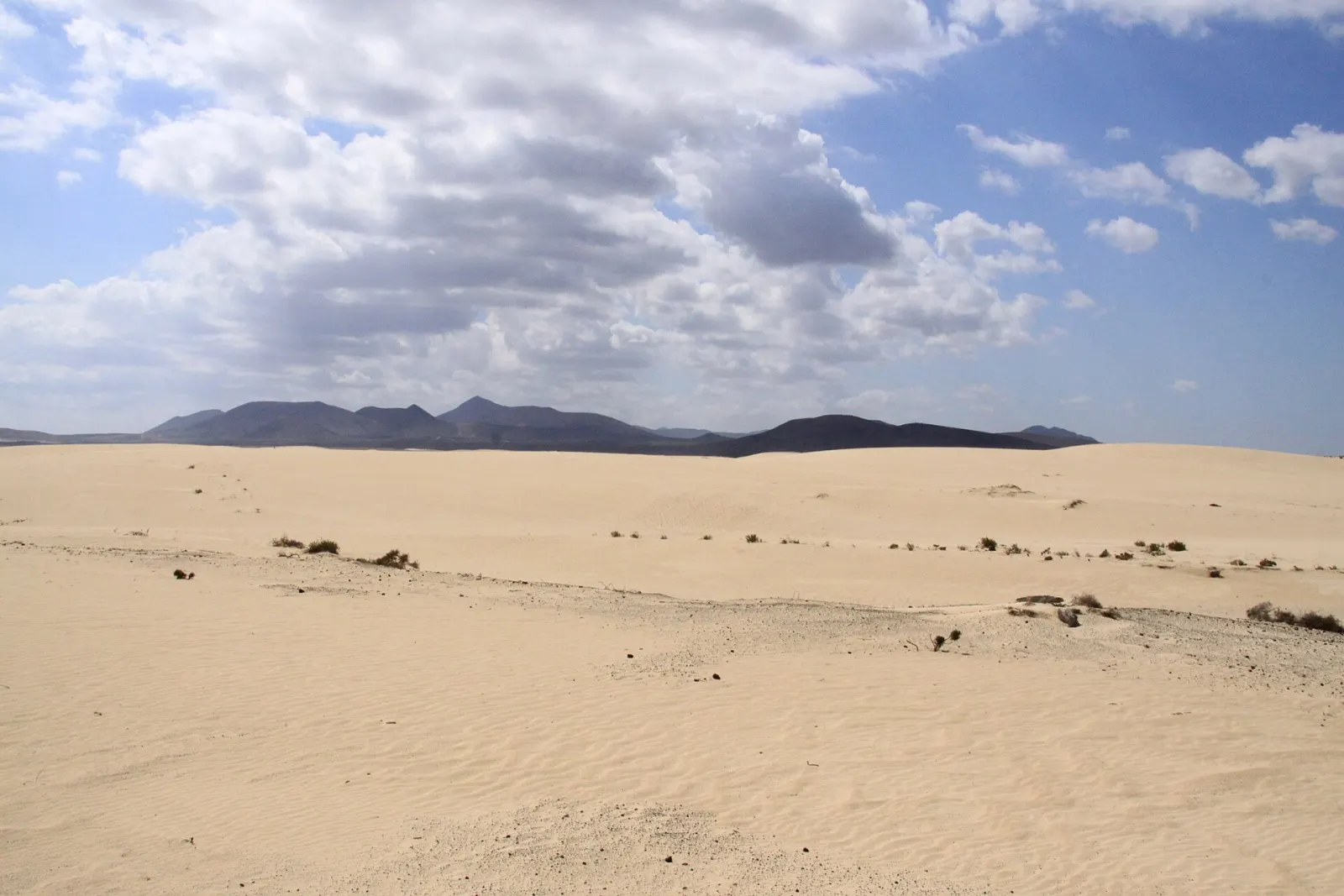
At the other end of the island, the Corralejo Dunes offer easier access and calmer beaches; for surfing there, see surfing in Corralejo. If you are choosing which island suits you, our guide Which Canary Island is right for you? compares them.
Don’t miss
Know before you go
- Don't swim in rough sea. Strong currents and surf are reported and there is no lifeguard service.
- Check your rental contract. The only road in is unpaved; many contracts restrict unsurfaced tracks.
- Plan the bus return first. Tiadhe line 111 has few departures; check tiadhe.com.
- Bring everything you need. No shade, water or services on the beach.
Getting there
From Morro Jable, follow the unpaved road west and north over the Degollada de Agua Oveja pass, the only road into Cofete; drive slowly and check that your rental contract allows unsurfaced roads. Without a car, take Tiadhe line 111 (Morro Jable – Cofete – Punta de Jandía) and check the few daily departures on tiadhe.com before you go. Morro Jable itself is served from Puerto del Rosario by Tiadhe lines 01 and 10.