Corralejo Dunes
Fuerteventura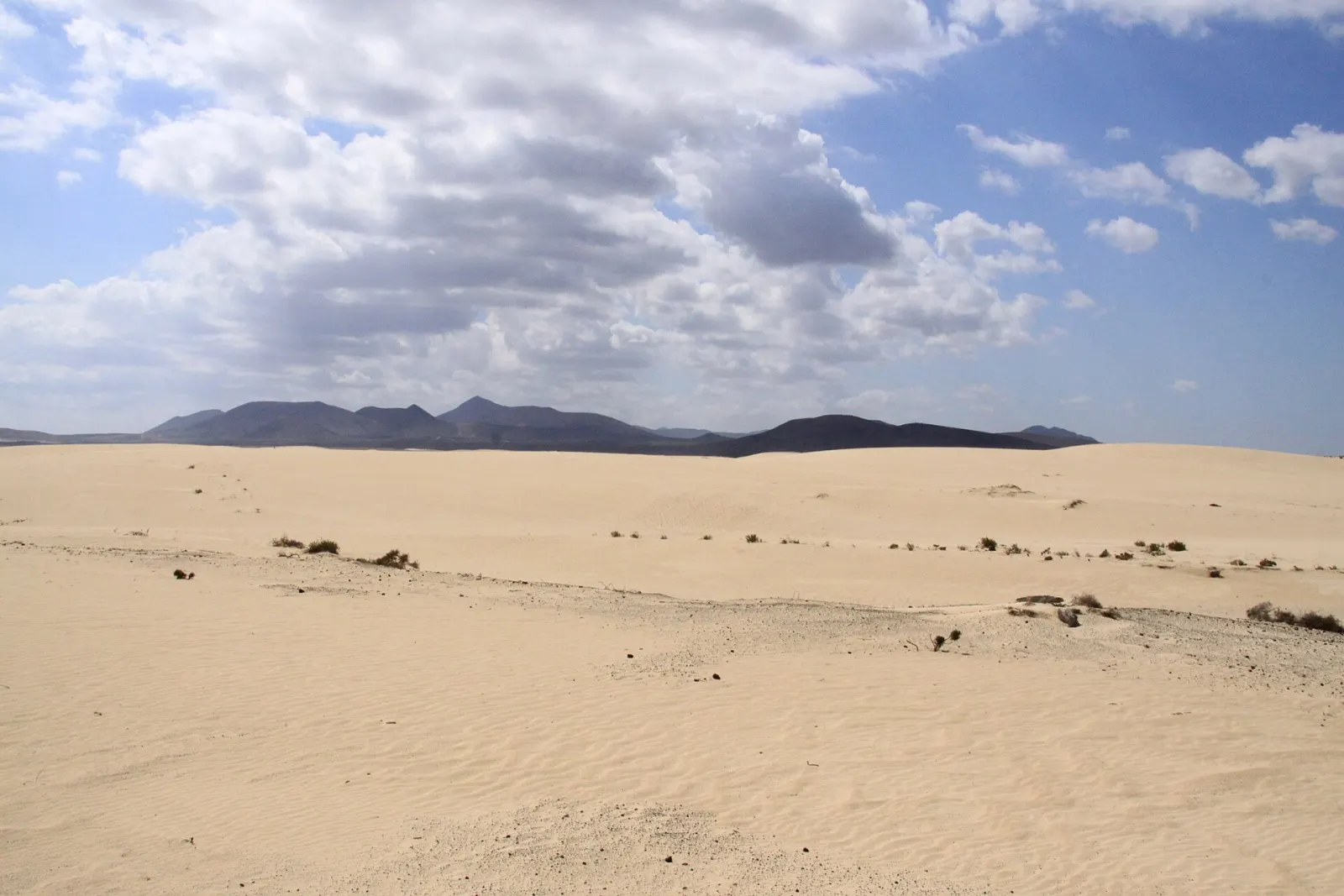
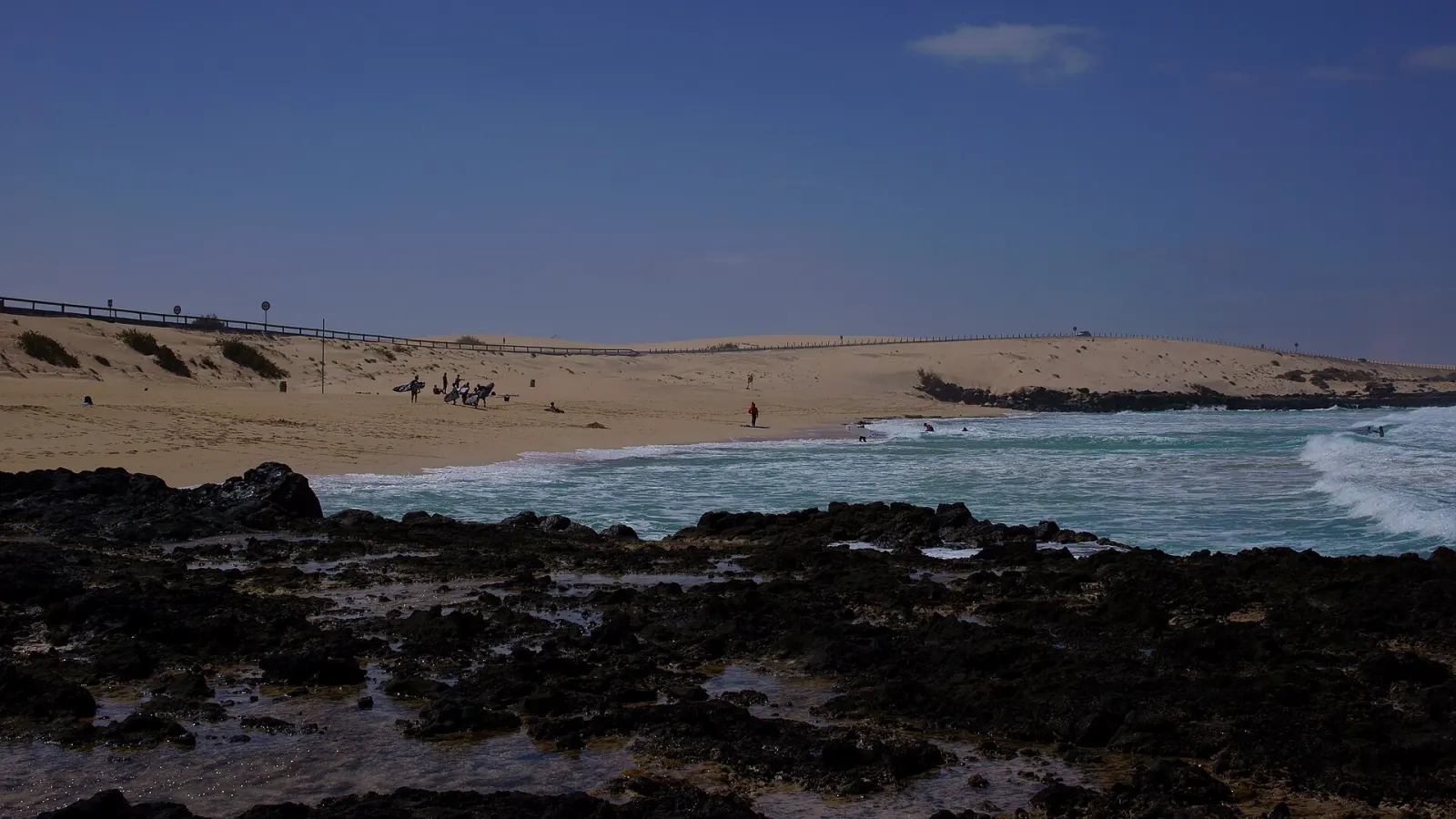
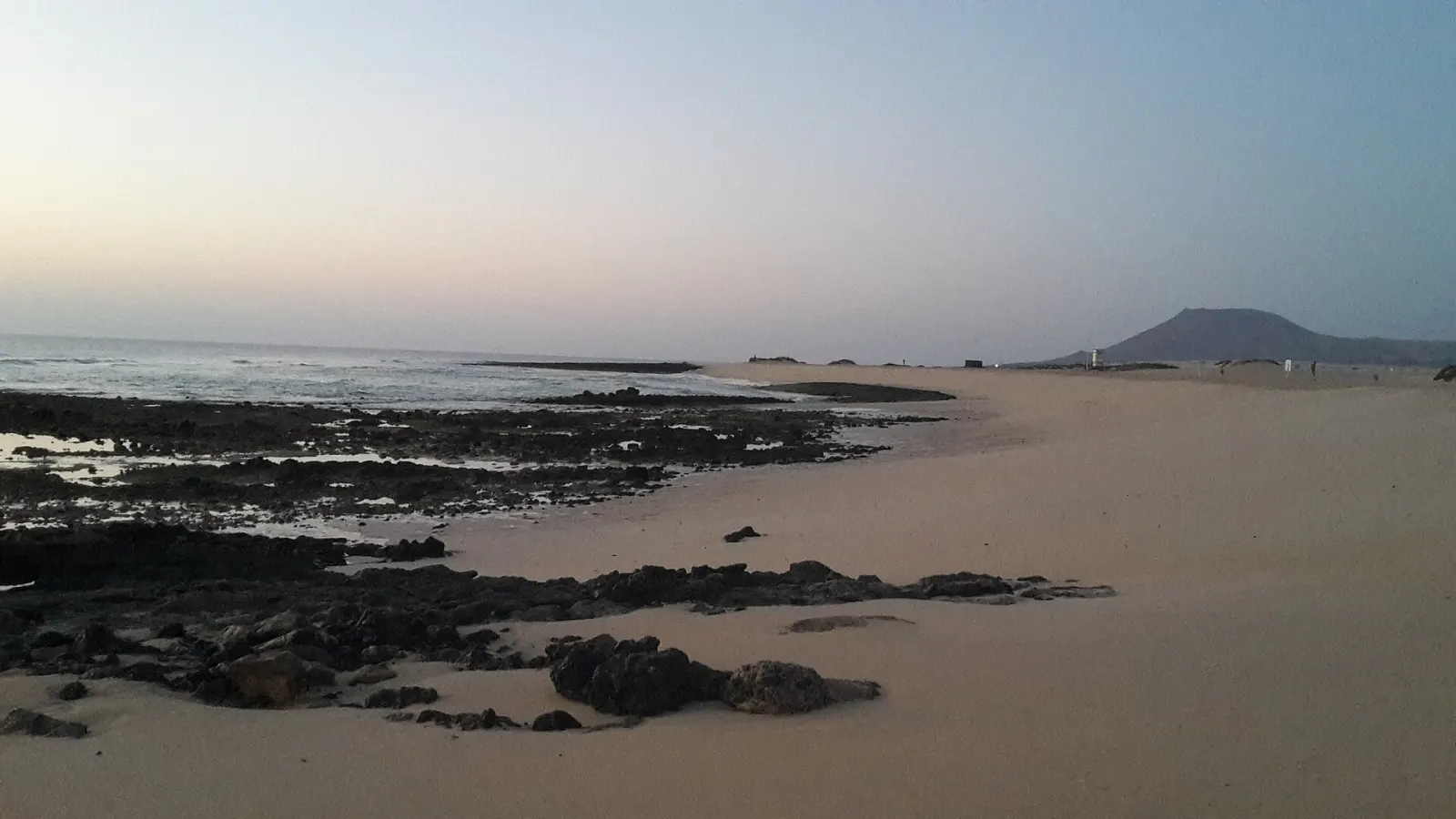
The Parque Natural de Corralejo protects more than 2,600 ha of white, shell-derived dunes in La Oliva, north Fuerteventura, the largest dune field in the Canaries. Its seaward edge is the 3.5 km Grandes Playas beach strip.
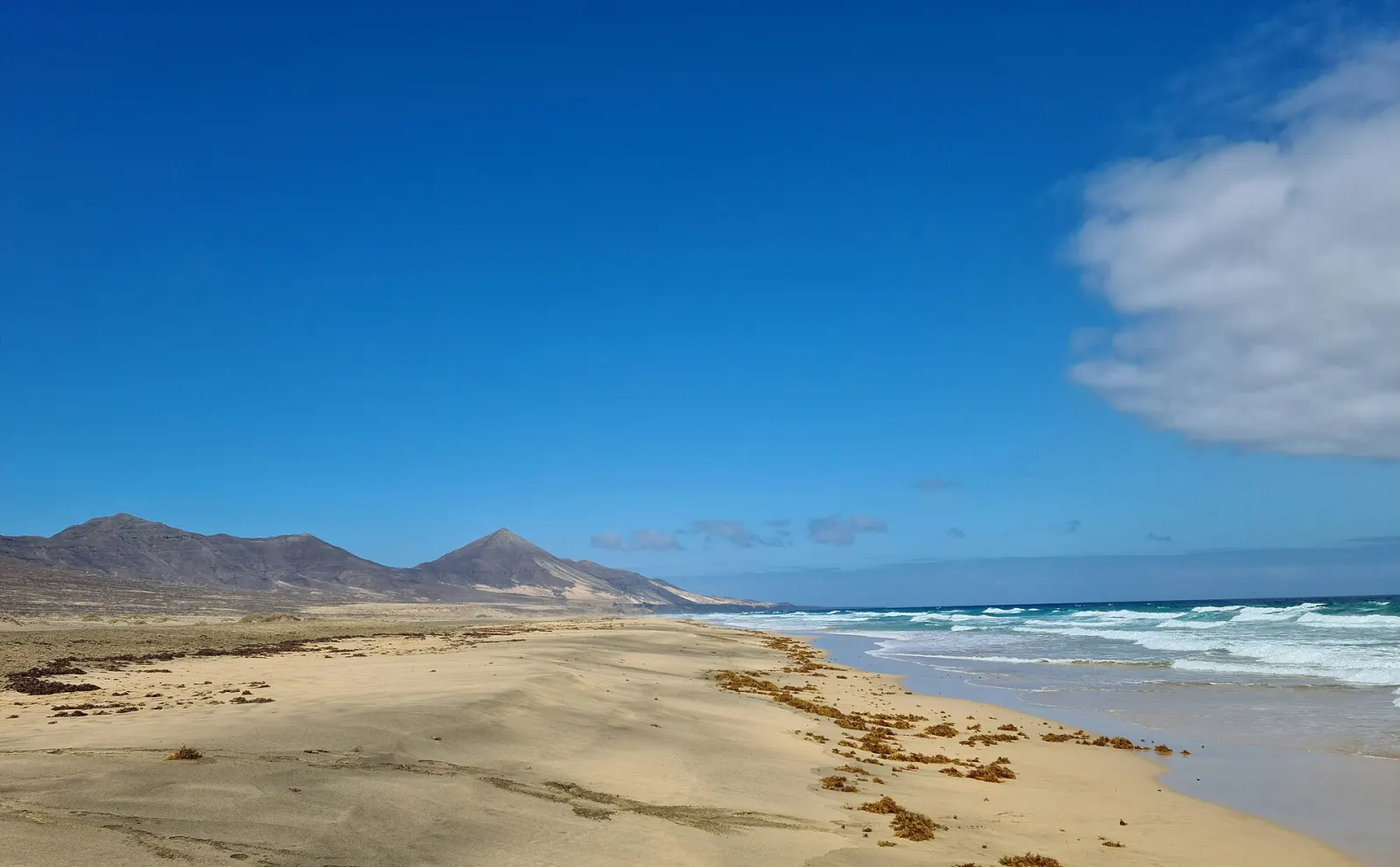
The Corralejo Dunes are protected as the Parque Natural de Corralejo, more than 2,600 ha of mobile white dunes in the municipality of La Oliva, just south of the town of Corralejo on Fuerteventura. Classified as a natural park in 1994, they form the largest dune field in the Canary Islands. Along the coast, the Grandes Playas run for about 3.5 km of open sand facing the islet of Lobos and, on clear days, Lanzarote.
Why is the sand so white?
The dunes have an organic origin: the sand comes from crushed shells of molluscs and other marine organisms, not from volcanic rock. That is why it is much paler than the black or golden sand found elsewhere in the archipelago. The mobile dune field partly covers older fossil dunes, probably from the Upper Pleistocene, and in several places along the shore a fossil beach with remains of marine organisms is exposed.
What are the Grandes Playas?
The Grandes Playas are a chain of beaches — Los Martos, El Viejo, Larga, El Pozo and El Caserón — totalling about 3.5 km, much of it inside the natural park. The only buildings inside the protected area are the hotels on the shore, whose location has long been controversial. Several sections are used for naturism, and many visitors build low semicircular windbreaks from stones on the sand. The beaches are known for surfing, windsurfing and kitesurfing; see surfing in Corralejo.
What should you know before swimming or walking?
The coast is exposed to the trade winds, so afternoons are often breezy and sand blows across the dunes; sunglasses help. There is no natural shade. Follow any flags and lifeguard instructions where present, and keep children in sight in the surf. Inside the park, stay on existing paths and do not drive off the road onto the sand — vehicles on the dunes are an offence in a natural park.
Is there still a road through the park?
Yes, but it is much quieter than before. Since 2019 the FV-1 dual carriageway between La Caldereta and Corralejo bypasses the park; the old coast road through the dunes is now the FV-104. The FV-104 still gives direct access to the Grandes Playas.
When is the best time to visit?
Early morning and late afternoon give softer light and less wind than midday. Calima days bring hazy skies and dust; the weather-by-month guide explains the seasons.
How does it compare with other places?
The dunes on Gran Canaria's south coast, the Maspalomas Dunes, are smaller and surrounded by resorts, while Corralejo feels more open. For a wilder beach on the same island, the long drive to Cofete on the Jandía peninsula shows the opposite end of Fuerteventura.
Don’t miss
Know before you go
- Expect wind in the afternoon. Trade winds blow sand across the dunes; sunglasses and a windbreak help.
- Never drive onto the sand. Leaving the road with a vehicle in a natural park is an offence.
- Bring your own shade. There are no trees on the dunes or Grandes Playas.
Getting there
From Puerto del Rosario and the airport, drive north on the FV-1 towards Corralejo and take the FV-104, the old road that runs through the park beside the Grandes Playas. By bus, Tiadhe line 06 links Puerto del Rosario with Corralejo; check stops and times on tiadhe.com.