
Corpus Christi carpets of La Orotava
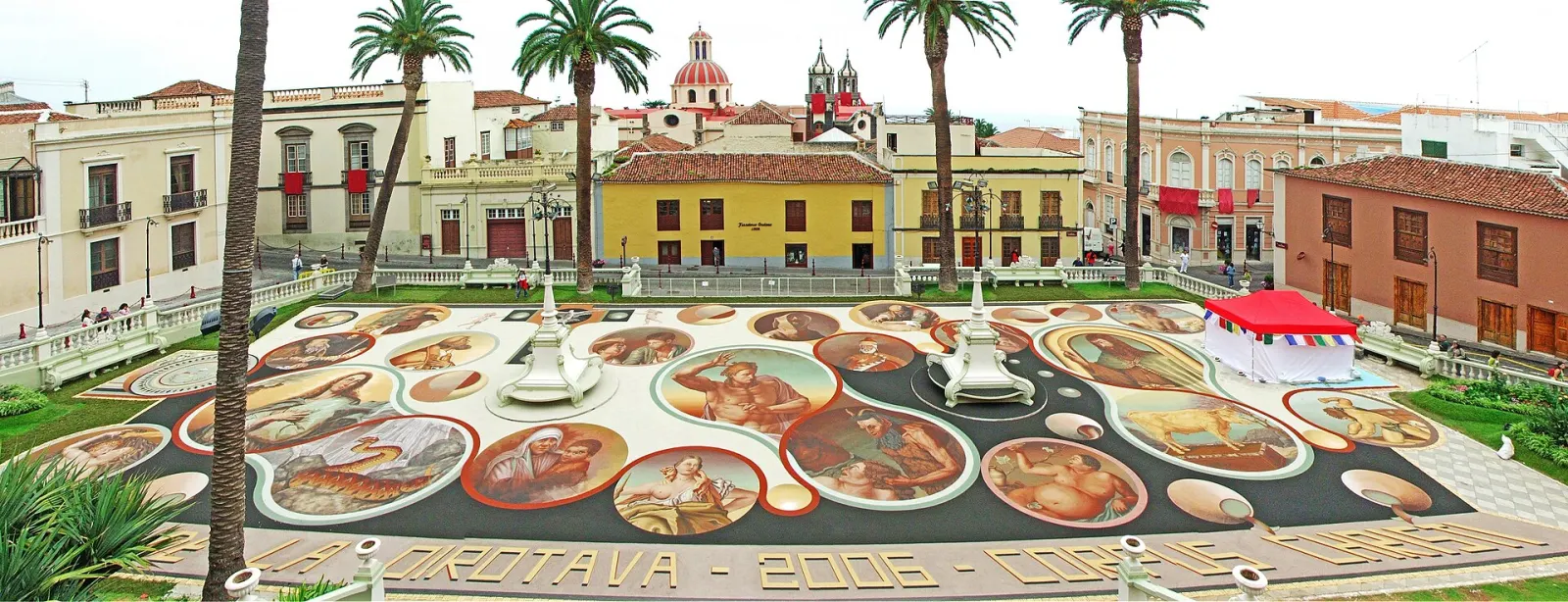
Every June the old town of La Orotava is covered with flower carpets and its town-hall square with a huge tapestry made from coloured volcanic sands of Teide National Park, for a procession that walks over them.
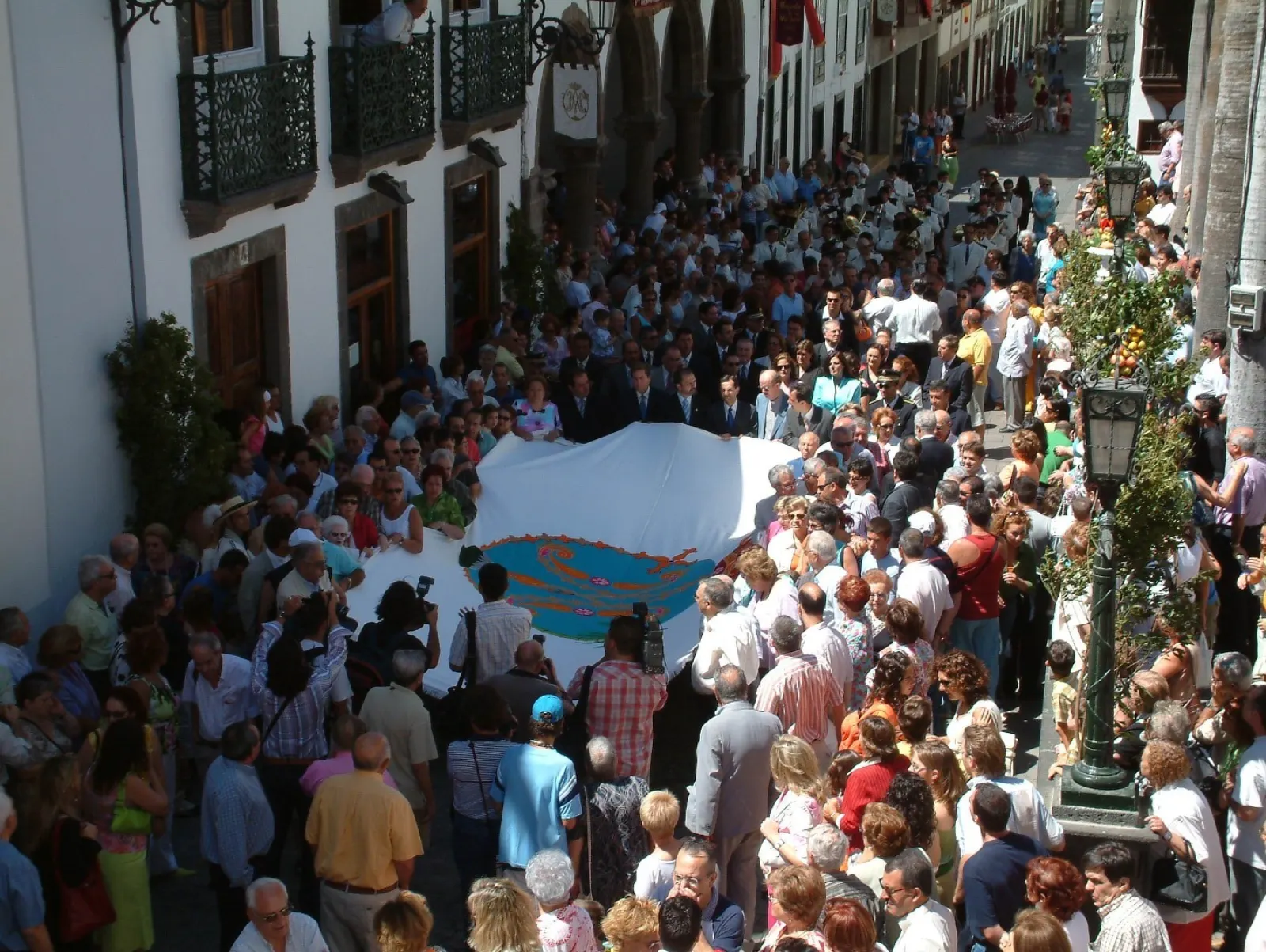
La Orotava, in the north of Tenerife, celebrates Corpus Christi by covering the cobbled streets of its old town with carpets of flowers and the Plaza del Ayuntamiento with a monumental tapestry of coloured volcanic sands from Teide National Park. The procession leaves the Iglesia de la Concepción and walks over the work, which is then gone. The carpets were declared a Bien de Interés Cultural (cultural heritage asset) by the Canary Islands Government in 2007.
When are the La Orotava carpets made?
The carpets are laid for the Infraoctava of Corpus Christi, the Thursday one week after the feast itself. Because Corpus Christi depends on the date of Easter, the day moves between late May and June: in 2024, for example, it fell on 6 June. Applying the same rule, 2027 points to Thursday 3 June (Corpus Christi itself is 27 May 2027), but the town hall has not yet published its programme, so treat that as provisional. The carpets are part of La Orotava's wider patron-saint festivities, which also include the Romería de San Isidro and the Baile de Magos; in 2026 the programme ran from 15 May to 14 June.
How did the tradition start?
According to the town hall's guide to the carpets, the first flower carpet was made between 1844 and 1847 by Leonor del Castillo y Bethencourt and María Teresa Monteverde y Bethencourt in front of their house on Calle Colegio, to revive a Corpus celebration that had declined. Neighbouring families joined, and by the 1880s the whole procession route was carpeted. The families developed techniques still used today, such as toasted heather for shading.
The town-hall square, inaugurated in 1912, got its first flower carpet on 11 February 1905, for a visit by Spanish Navy sailors. From 1919 carpets were made there for the entry of Corpus Christi. Early versions used cereals and pulses, which sprouted in the damp and attracted pigeons; today the tapestry is made with natural coloured sands extracted from Teide National Park. In 2007 Guinness World Records listed it as the largest carpet made with volcanic sands.
What will you see on the day?
- The sand tapestry in the Plaza del Ayuntamiento, designed around a religious theme. The 2026 tapestry, "Paraíso Canario", was dedicated to the Virgen del Carmen and showed Teide above the sea of clouds of the Orotava Valley.
- Flower carpets along the streets of the historic quarter, made by families and groups, some on the same corners since the 19th century, such as the Cuatro Esquinas.
- The procession, which crosses the carpets later in the day and leaves them scattered.
Tips for visiting
Go in the morning to see finished carpets intact and watch the final touches; after the procession they are destroyed. Tapestry and carpets are fragile: do not step on them and keep children and bags clear. The old town is steep, and parking is very limited on the day, so arrive early or come by TITSA bus. Rain can damage the sand work, as happened in 2023.
La Orotava is the usual gateway from the north to Teide National Park, and makes an easy pairing with La Laguna's old town. See the Tenerife island guide for other bases on the island.
Programme highlights
-
Days before
Sand tapestry in progressArtists work in the Plaza del Ayuntamiento with sands from Teide National Park.
-
Infraoctava Thursday
Flower carpets laidFamilies and groups cover the old-town streets with petals and heather.
-
Infraoctava Thursday, later
Corpus processionLeaves the Iglesia de la Concepción and walks over the carpets.
-
Following weeks
Romería de San IsidroThe town's big country pilgrimage closes the festive season (14 June in 2026).
Tips for visitors
- Come in the morning. Carpets are finished early and destroyed when the procession passes.
- Don't drive into the old town. Streets are steep and closed; park on the outskirts or take a TITSA bus.
- Keep off the carpets. They are fragile, ephemeral works made for the procession; watch bags and children.
- Check the programme. The exact day depends on Easter; the town hall publishes it each spring on laorotava.es.
More festivals across the islands
 22 Jan 2027
 22 Jan 2027
 February
 July