Roque de los Muchachos
La Palma · 2.426 m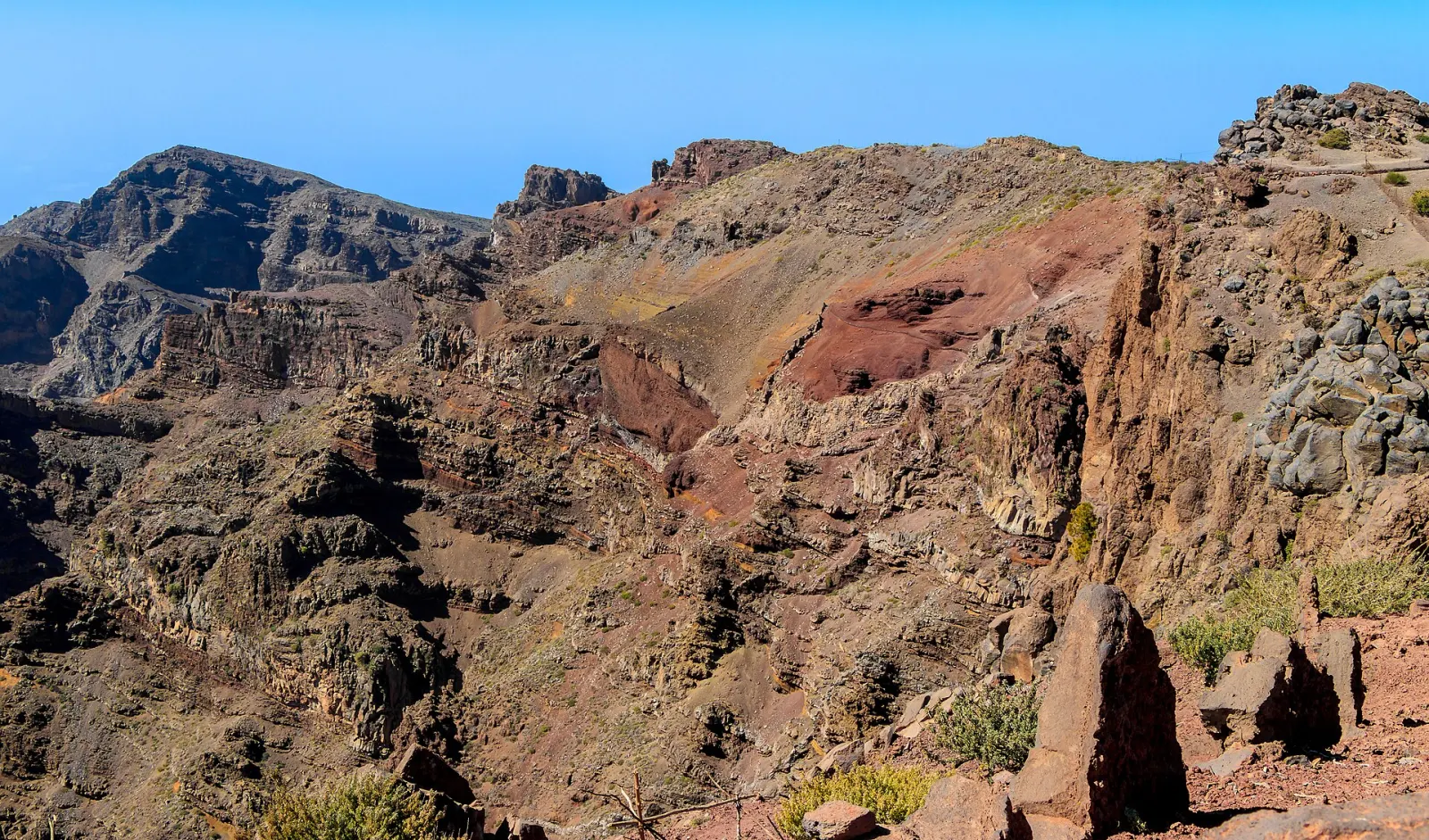
La Palma's highest point (2,426 m), on the rim of the Caldera de Taburiente, next to one of the world's leading astronomical observatories.
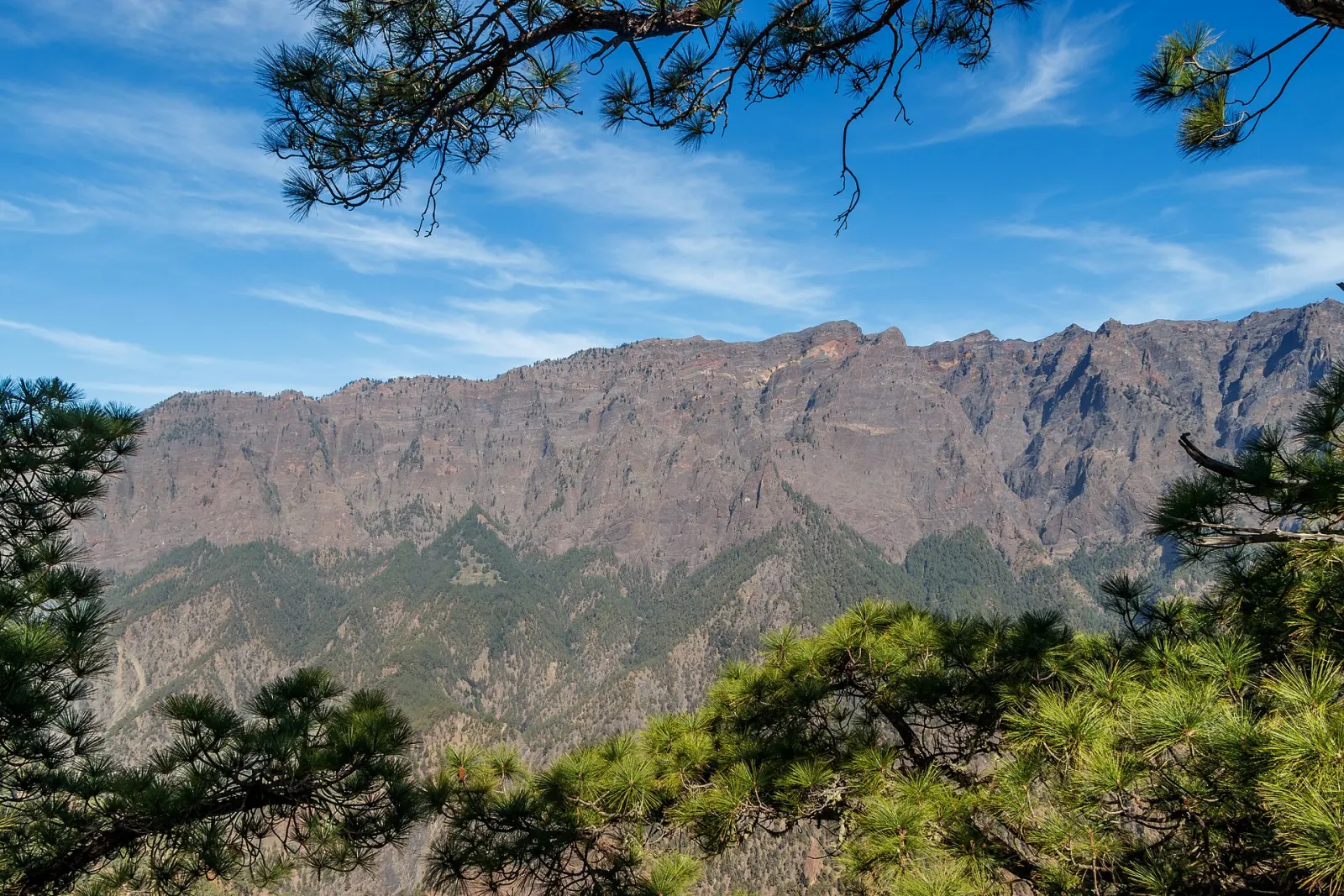
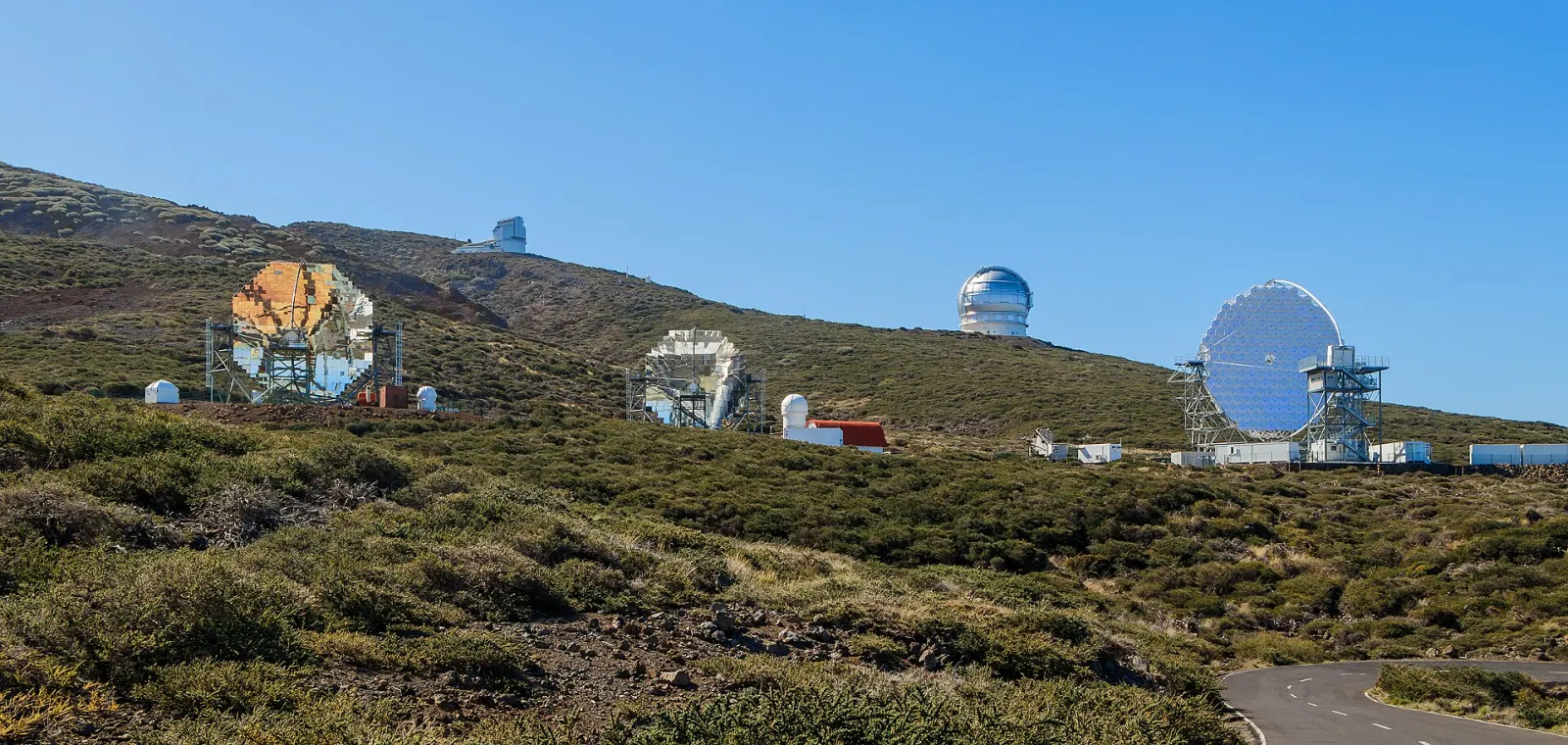
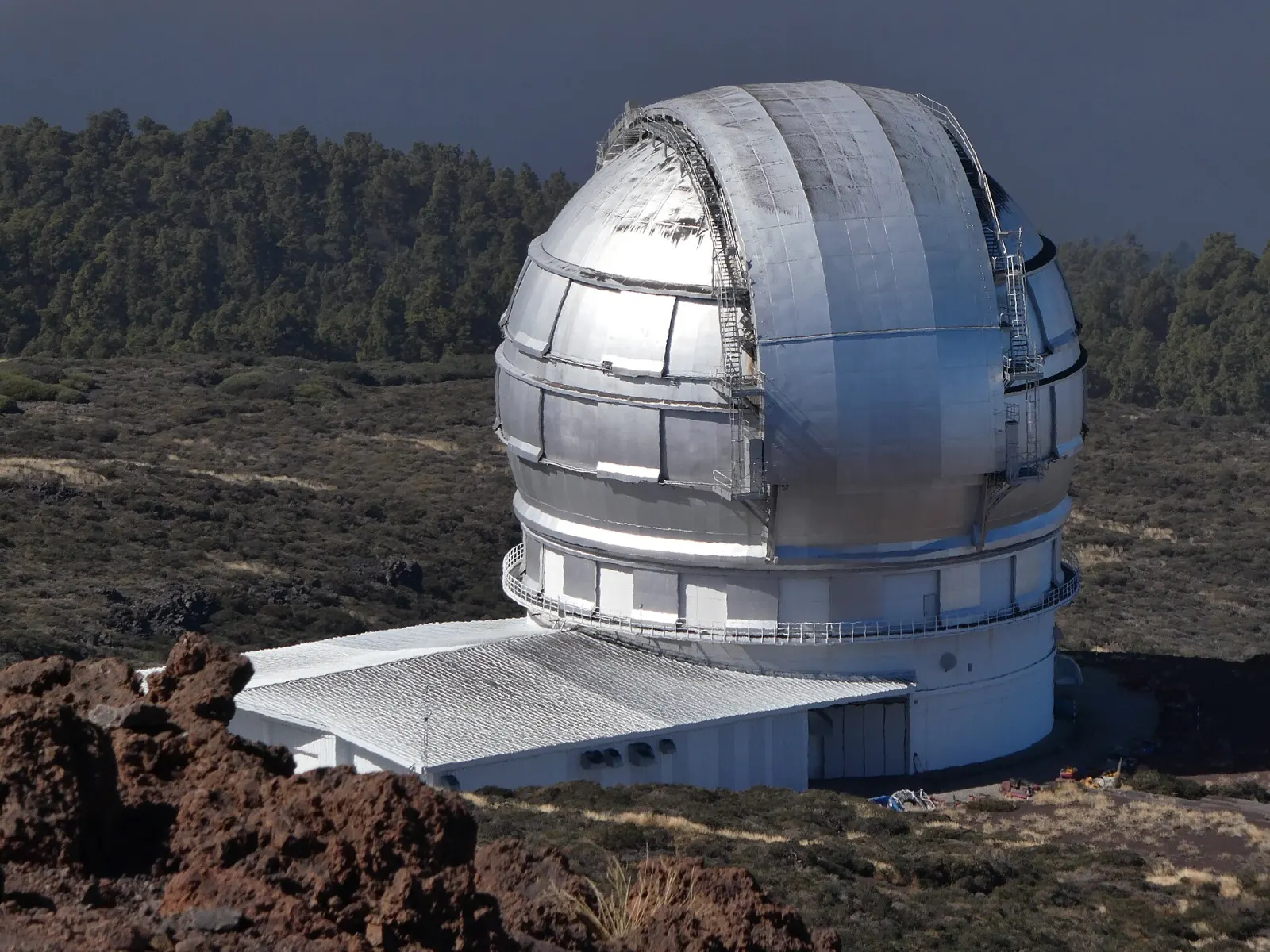
Roque de los Muchachos is the highest point of La Palma, a cluster of rocks at 2,426 m on the northern rim of the Caldera de Taburiente, in the municipality of Garafía. Beside it stands the Roque de los Muchachos Observatory, run by the Instituto de Astrofísica de Canarias (IAC) and inaugurated in 1985, home to some of the largest telescopes in the world. People drive up for the view into the caldera, the sea of clouds below and, on clear days, the outlines of Tenerife, La Gomera and El Hierro.
What can you see from the summit?
From the viewpoint on the top, the ground falls away almost 2,000 m into the caldera on one side, while the other side drops towards the north coast. When the trade-wind clouds sit below the summit you look over a white layer with Teide rising out of it on Tenerife.
Can you visit the telescopes?
Yes, with conditions. The IAC offers guided daytime visits for private individuals that must be booked in advance through the Starlight Foundation website; they are led by Starlight-trained guides, last about 1 h 30 min in small groups and start at the observatory's visitor centre. The IAC states that visits are suspended between December and March because of weather, and that any visit depends on telescope operations and conditions on the day. Schools and associations apply through the IAC itself. Among the instruments on the mountain are the Gran Telescopio Canarias, with a 10.4 m mirror, the 4.2 m William Herschel Telescope and the MAGIC and LST-1 gamma-ray telescopes. Visits run in daylight only; for night-sky sessions, see guided stargazing on Teide on Tenerife or local operators on La Palma.
What should you know before driving up?
The summit is reached only by car, taxi or organised tour: according to the national park there is no regular bus. At 2,426 m it is much colder and windier than on the coast, even in summer, so bring a warm layer. The approach is long and winding; allow plenty of time and avoid driving down in fog after sunset. Headlights and noise can disturb observatory work, so stay on public areas and follow any signs near the telescopes. The summit is one of the two points in the national park that the park lists as accessible for wheelchair users.
When is the best time to go?
Clear, settled days give the longest views to the other islands. Mornings are usually calmer for driving; late afternoon light over the sea of clouds is popular too, but plan your descent before dark. Check the IAC visit page if a telescope tour is the reason for your trip, since visits pause in winter.
How does it fit into a La Palma trip?
Combine the summit with La Cumbrecita on the south side of the caldera on a separate day, or with the north of the island. For more planning, see our La Palma guide.
Don’t miss
Know before you go
- Book observatory visits ahead. Private visits are booked through the Starlight Foundation and are suspended from December to March.
- Pack a warm layer. At 2,426 m it is far colder and windier than on the coast.
- No bus to the top. Use a car, taxi or organised tour, and plan to descend before dark.
Getting there
According to the Caldera de Taburiente national park, the summit is reached from Santa Cruz de La Palma by the LP-1032 towards the Observatorio, or from Los Llanos de Aridane via the LP-1 and then the LP-113, turning off at the observatory residence junction. There is no regular bus, so the options are a hire car, taxi or organised trip; an information booth stands at the top.