Stargazing on Teide
Teide National Park · Izaña · El Portillo, Tenerife 2–4 h after sunset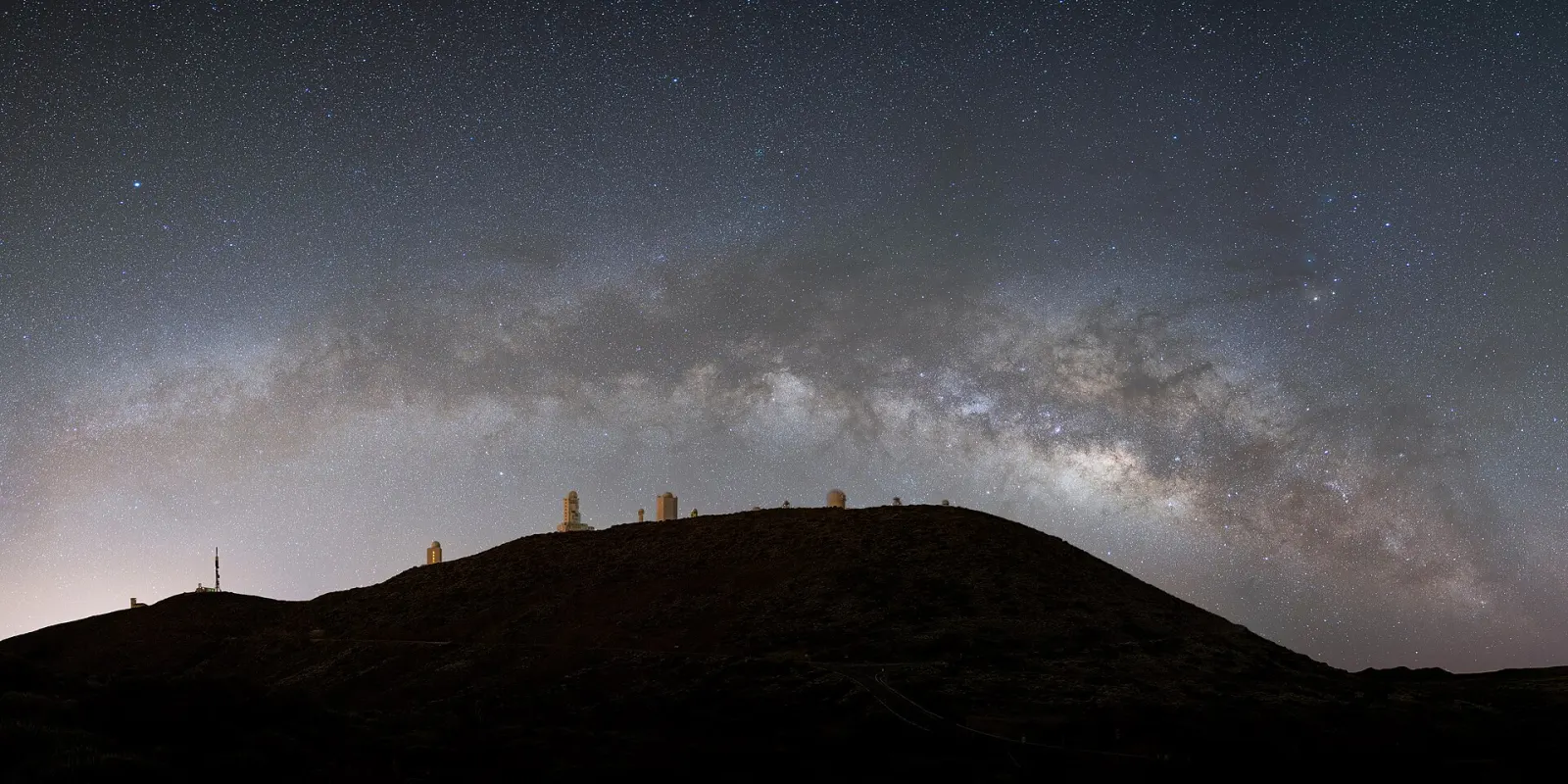
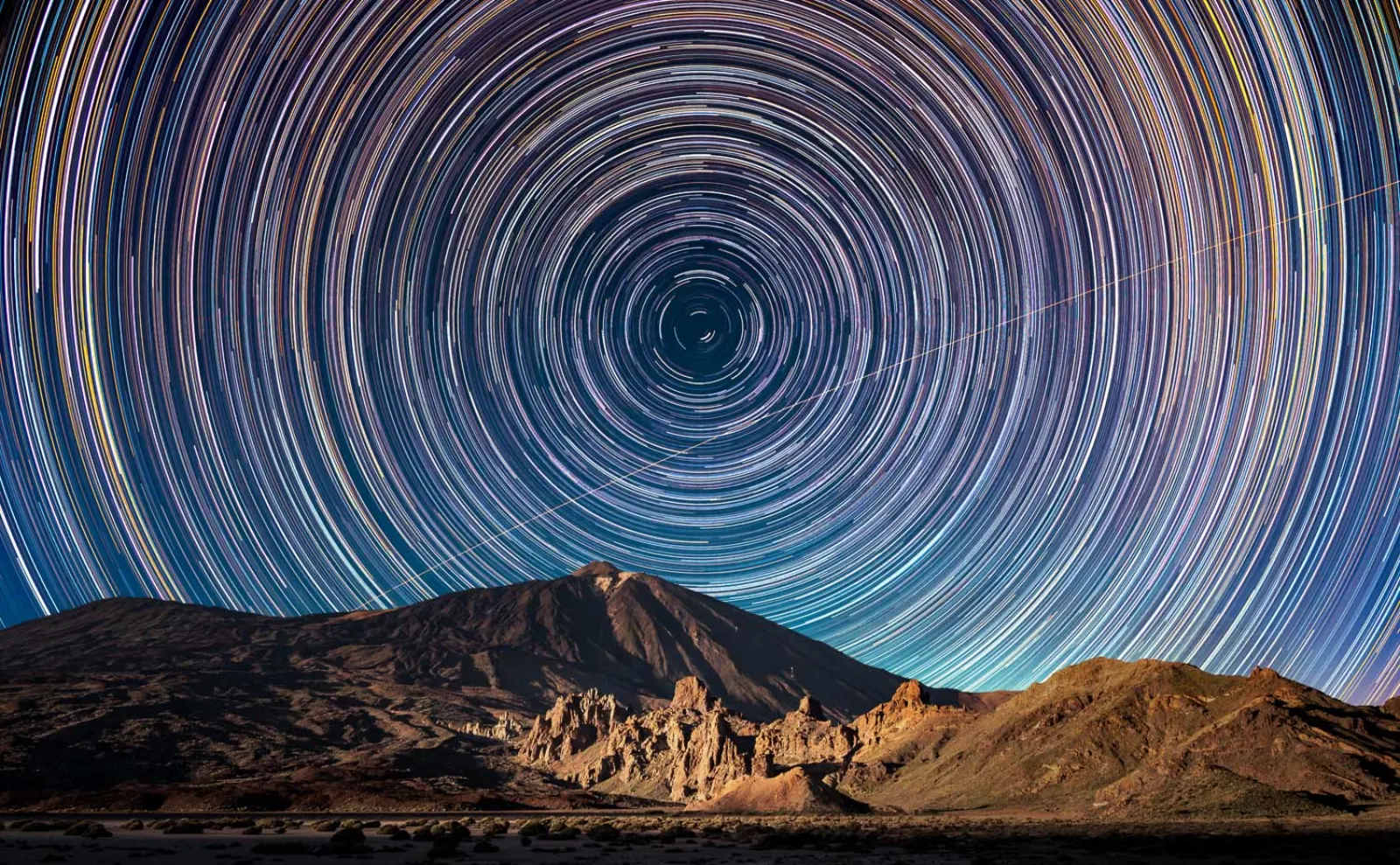
Above the sea of clouds, Teide National Park holds Starlight certificates as both a tourist destination and a reserve, and the Teide Observatory has worked at 2,390 m since 1964. Here is how the skies are protected and how to plan a night up there.
Stargazing on Teide means heading up into Teide National Park, above roughly 2,000 m, after sunset. The park and its peaks hold the Starlight certificate both as a Tourist Destination and as a Reserve, and the Instituto de Astrofísica de Canarias (IAC) has run the Teide Observatory at Izaña, at 2,390 m, where the first telescope was installed in 1964. The reasons are practical: altitude, clean and stable air, and a sea of clouds that often sits below the summits and blocks light from the coast.
Why is the sky over Teide so dark?
Webtenerife, the Cabildo's tourism site, credits the clear skies, pure air and the island's position near the Tropic of Cancer, plus the sea of clouds that forms below the observatory and holds back the glow of the coastal towns. The IAC places the observatory at Izaña, where the municipal boundaries of La Orotava, Fasnia and Güímar meet. The Starlight initiative behind the park's certificates is backed by UNESCO and the International Astronomical Union.
What is the "Sky Law"?
Spain's Ley 31/1988 of 31 October 1988, on the protection of the astronomical quality of the IAC observatories, is known locally as the Ley del Cielo (Sky Law). It is worth knowing what it does and doesn't cover in Tenerife:
- Its outdoor-lighting rules (no light emitted above the horizon) were written for La Palma, home of the Roque de los Muchachos Observatory. In Tenerife, the law expressly excludes outdoor lighting, as long as it does not disturb the La Palma observatories.
- It does apply to Tenerife's observatories for radio emissions and for polluting industries or activities above 1,500 m, which need an IAC report.
So Tenerife's coast is not dark by law; the darkness you find on Teide comes from altitude, distance and the cloud layer. For a sky under strict lighting rules, see Roque de los Muchachos on La Palma.
Where should you go?
Webtenerife names El Portillo, Ucanca, Izaña and Chipeque among the best stargazing spots on the way up to and inside the park, and singles out the Las Cañadas caldera as one of the best places in the world to watch the Geminid meteor shower in December. Use official car parks and viewpoints and never stop on the road shoulders: the TF-21 and TF-24 are dark, winding mountain roads.
When is the best time?
- Moon: plan around new moon; a full moon lights up the caldera and washes out faint stars.
- Weather: the sea of clouds helps, but high cloud, calima (Saharan dust) or snow can ruin a night. Check AEMET and the park's road status before driving up.
- Season: the December Geminids are the classic event; summer nights are warmer but shorter.
What do people get wrong?
- Temperature. At 2,000–2,400 m nights are cold for much of the year, even when the coast is warm. Bring a down jacket, hat and gloves.
- Driving. Allow for dazzled eyes on the descent and for fatigue; the road down to the coast is long.
- Light. Use a red torch and keep headlights off once parked so others can adapt to the dark.
The cable car operator also runs sunset trips on the Teide cable car. For an overview of the island, see Tenerife.
Know before you go
- Dress for a mountain night. At 2,000–2,400 m nights are cold for much of the year; bring a down jacket, hat and gloves.
- Check the moon and the clouds. Plan around new moon and check AEMET for high cloud, calima or snow before driving up.
- Park only where allowed. Use official car parks and viewpoints; the TF-21 and TF-24 are dark, winding mountain roads.
- Use red light. A red torch keeps your night vision; switch off headlights once parked.
More things to do
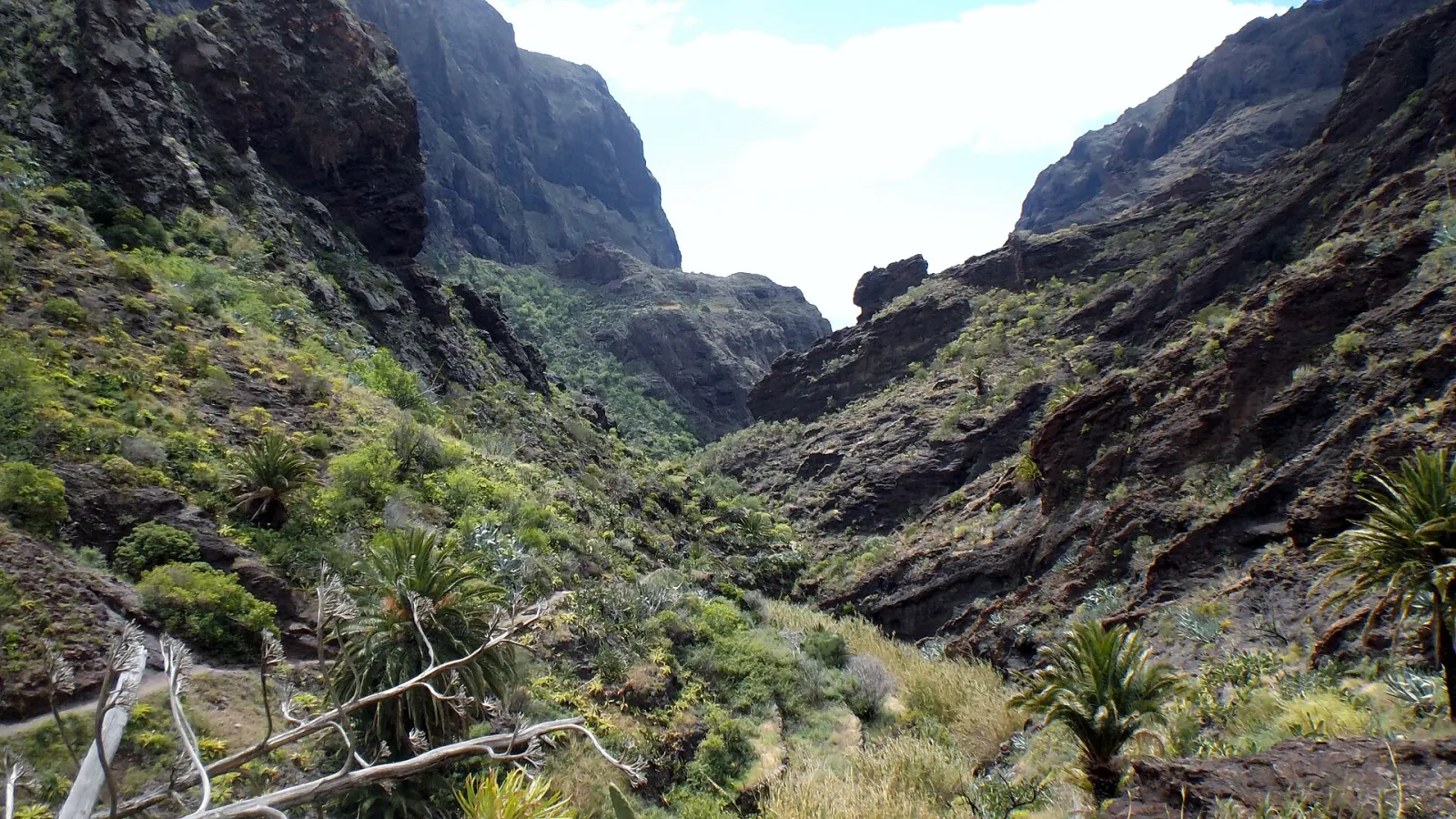
Masca Gorge hike
Masca · Teno Rural Park · Buenavista del Norte · Tenerife About 4 h descent (plus shuttle and boat)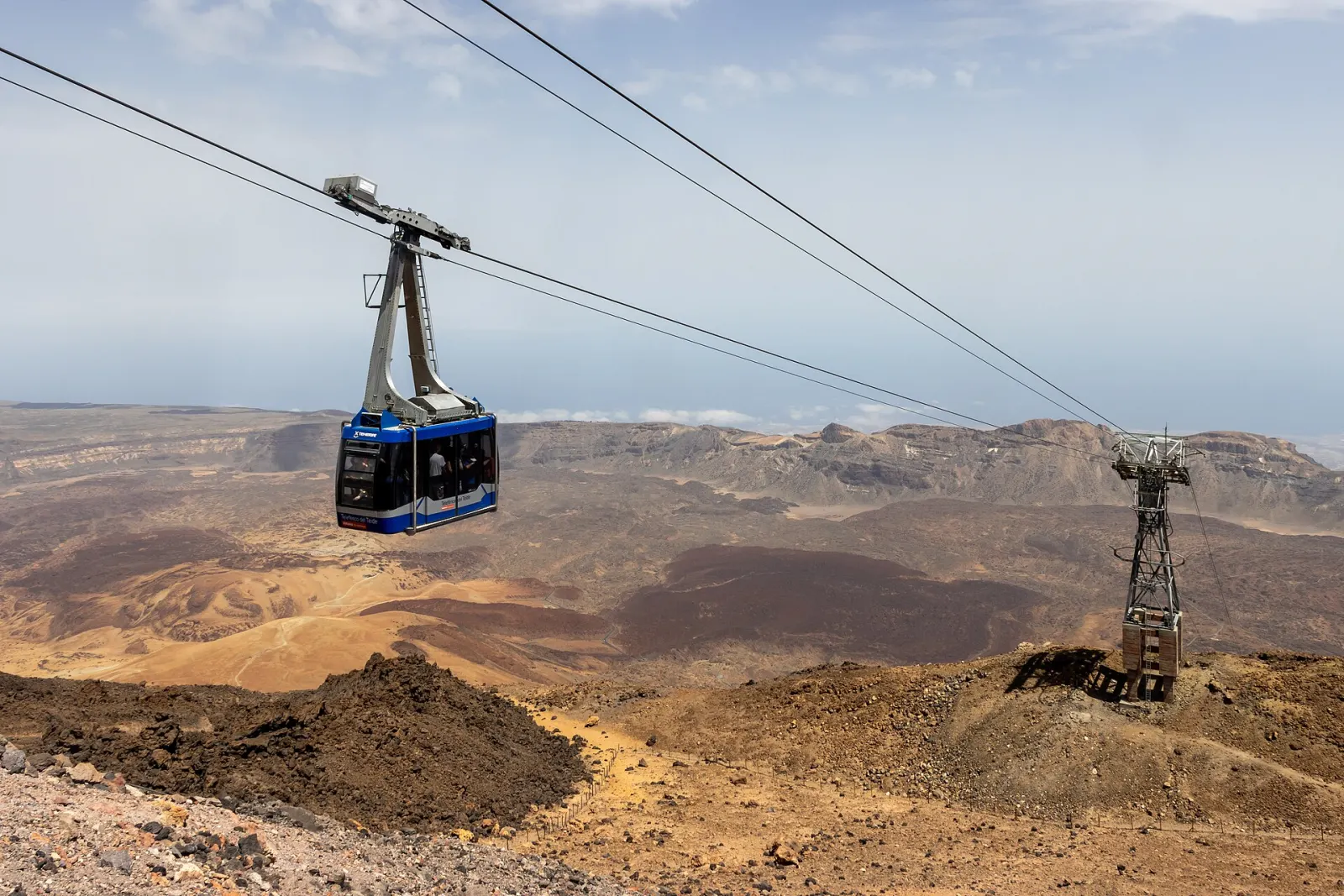
Teide cable car
Teide National Park · TF-21 · Tenerife 2–3 h incl. walks at the top