Canarian food guide: papas arrugadas, mojo, gofio, cheese and volcanic wine
What papas arrugadas, mojo, gofio and almogrote are, which Canarian cheeses and wines carry EU protected status, and how to recognise the genuine product.
Published 28 October 2026 · Facts checked on 28 October 2026
Canarian food is built on a short list of island products: small potatoes boiled in their skins with plenty of salt, the pepper-and-garlic sauces called mojo, toasted-grain flour (gofio), goat and sheep cheeses, and wines grown in volcanic soil. Several of them are protected by EU quality labels — three cheese DOPs, the Papas Antiguas de Canarias DOP, the Gofio Canario IGP and eleven wine DOPs — so you can check what you are buying. This guide explains what each one is, where it comes from and how to recognise the genuine article.
What are papas arrugadas and why are they wrinkled?
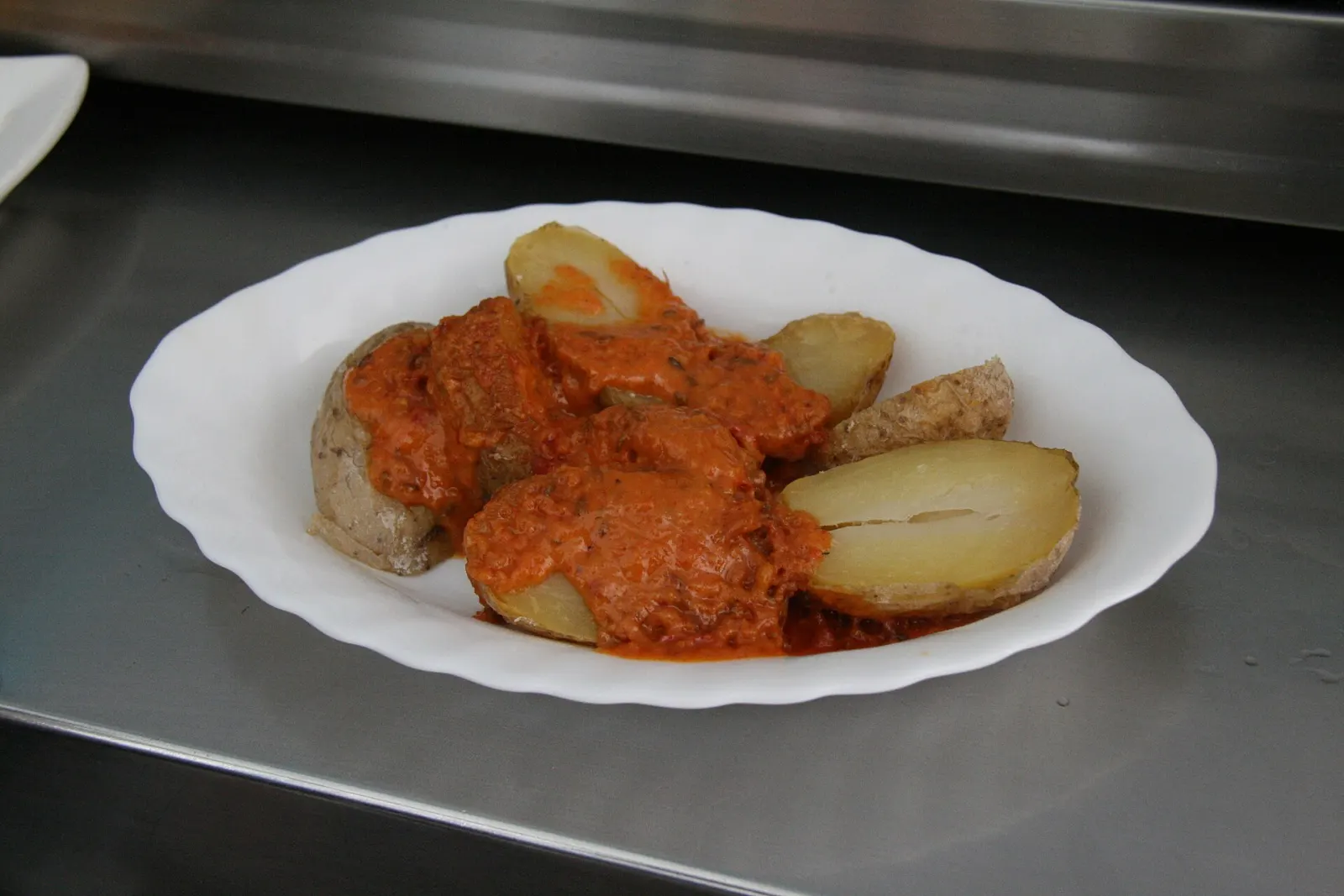
Papas arrugadas ("wrinkled potatoes") are the archipelago's signature way of cooking potatoes. They are boiled unpeeled in water with a lot of salt — preferably sea salt, and in the past sometimes in seawater itself. Once the water is drained and the potatoes dry off, a fine salt crust forms on the wrinkled skin. They are eaten skin and all, usually with mojo, either as a side for meat or fish or on their own as a tapa.
The variety most associated with the dish is the papa bonita, but other local potatoes are used too.
What makes "papas antiguas" different?
Papas Antiguas de Canarias is a Protected Designation of Origin (DOP). According to the Canary Institute of Agri-food Quality (ICCA), it covers 29 varieties known locally as antiguas ("old"), de color or de la tierra, introduced to the islands before the 20th century and grown from seed produced in the islands themselves. They are small — 1 to 8 cm — with skins that range from purplish-black through brown, pink and orange, and flesh from cream to egg-yolk yellow, a colour that deepens with cooking. If a menu names a specific old variety, it is worth asking for: they are not the same as an ordinary imported potato.
What is mojo, and what is the difference between red and green?
Mojo is the family of cold sauces served across the islands. The two you will meet most often are:
- Mojo rojo (including mojo picón): made with the small hot pepper called pimienta palmera or picona plus paprika. It is usually served with meat. Because it contains no water it keeps for a long time unless tomato is added.
- Mojo verde: in its strict form based on green peppers and used mainly with fish. The coriander (cilantro) and parsley versions contain water, so they are made fresh and eaten within a few days; the amount of garlic sets how hot they are.
Both are classic with papas arrugadas. A practical tip: mojo picón can be properly hot, so taste a little before spooning it over everything.
What is gofio and how is it eaten?
Gofio is flour made from toasted grain ground without sifting. The ICCA records that when Europeans arrived, the islands' Indigenous inhabitants were already toasting barley and other cereals and grinding them in hand-turned stone mills; they called the product gofio or ahoren. After the conquest, wheat and later maize became the main grains, though barley gofio is still made. Today some steps are mechanised, but toasting and milling still depend on the miller's experience.
Gofio Canario has been an EU Protected Geographical Indication (IGP) since 10 February 2014. Ways you will find it:
- stirred into milk, traditionally at breakfast;
- escaldón or escaldado: gofio mixed with hot stew broth into a thick paste;
- pellas: gofio kneaded into a dough and eaten in slices, the way bread is;
- in modern desserts such as ice cream and mousse.
Which Canarian cheeses have protected status?
Most traditional Canarian cheese is made from goat's milk from local breeds. Three cheeses hold an EU DOP:
| Cheese | Island / area | Milk | DOP since | Recognise it by |
|---|---|---|---|---|
| Queso Majorero | Fuerteventura (whole island) | Goat (raw or pasteurised), a little sheep allowed | 1996 | Rind may be rubbed with oil, gofio or paprika |
| Queso Palmero | La Palma | Goat, from the island's Palmera goats | 2002 | Fresh, or smoked versions |
| Flor de Guía, Media Flor, Queso de Guía | Guía, Gáldar and Moya (north-west Gran Canaria) | Canarian-breed sheep, sometimes mixed with cow or goat | 2007 | Flower pattern pressed on the faces; 2–5 kg |
Queso Majorero (Fuerteventura)
Fuerteventura obtained the first DOP in the Canary Islands in 1996, and the first in Spain for a goat's cheese. Majorero is sold fresh (tierno), semi-cured (semicurado) and cured (curado), with ageing from 8 days to more than 60. Rinds coated with oil, gofio or paprika each give a different note.
Queso Palmero (La Palma)
The ICCA highlights the quality of milk from the island's Palmera goats. The smoked versions carry aromas the ICCA describes as almond shell, Canary pine needles or bark and even dried prickly-pear pads. As it matures, the paste moves from bright white towards ivory.
Queso de Flor de Guía (Gran Canaria)
This is the only Canarian cheese curdled with a vegetable coagulant — the flower of the thistle (cardo). That gives it a soft, almost melting paste; the ICCA recommends waiting at least fifteen days after making before eating it.
What is almogrote?
Almogrote is a spread from La Gomera: finely grated, well-cured hard Gomeran goat's cheese worked into a paste with hot red pepper (pimienta picona or palmera), garlic and olive oil. It has a pâté-like texture and pale orange colour and is spread on bread or potatoes. It is one of the few dishes tied so closely to a single island, so it is the natural thing to look for on a trip to La Gomera.
Why is Lanzarote wine grown in holes in the ground?
The landscape of La Geria, between Yaiza and Tías next to Timanfaya National Park, exists because of the great eruptions of 1730–1736, which buried farmland under volcanic lapilli, known locally as picón. Growers dig pits (hoyos) through the picón to reach the older soil beneath — according to the Lanzarote wine DO the layer is up to 3 m deep in places — and plant one vine per pit, sheltered by a low semicircular stone wall against the wind. The picón lets the little rain soak in quickly, cuts evaporation and keeps soil temperature steady. Vines are planted about 4 m apart in La Geria, the maximum authorised yield is 7,000 kg per hectare, and the harvest is done by hand.
The DO Lanzarote was recognised in 1993 and registered by the EU in 1996. Its preferred variety is malvasía, the island type often labelled Malvasía Volcánica; listán negro and negramoll are the main reds. Combine a look at La Geria with a visit to Lanzarote's volcanic park.
How many wine regions are there?
The ICCA lists eleven wine DOPs: La Palma, El Hierro, Gran Canaria, La Gomera, Lanzarote, Abona, Tacoronte-Acentejo, Valle de Güímar, Valle de la Orotava, Ycoden-Daute-Isora and the island-wide Islas Canarias. According to the ICCA, vines arrived with European settlers between the 14th and 15th centuries; malvasía is the grape that made Canarian wine famous.
What other protected products should you look for?
- Miel de Tenerife (DOP): honey produced, conditioned and packed on Tenerife from hives on movable frames, without heat treatment; it comes as multifloral, monofloral or honeydew honey.
- Plátano de Canarias (IGP): the islands' banana.
- Ronmiel de Canarias: the honey-rum liqueur, also on the ICCA's list of protected products.
How do you recognise the real thing?
- Look for the seal. DOP and IGP products carry the official EU logo and the regulatory body's label; a generic "Canarian-style" cheese or gofio may be made elsewhere.
- Ask which island it comes from. "Queso canario" on its own says little; Majorero, Palmero and Flor de Guía are specific places.
- Read the potato. Small, irregular potatoes with coloured skins are a good sign of papas antiguas; large uniform ones usually are not.
- Check the wine label for the DO name rather than just the grape.
For the bigger picture, see which island suits your trip.